
If you live in the Midlands, you know the moment: one morning in spring your car, deck and windows are coated in yellow. Pine pollen is part of life in Lexington, Columbia, Irmo and around Lake Murray. You cannot stop it, but you can prepare your home so it is easier to deal with. This is a practical checklist for before, during and after pollen season.
Is pollen bad for your house?
Pollen itself does not eat through siding or roofs. The issue is what it does when it stays put. A layer of pollen holds moisture and gives algae and mildew something to feed on. It can also clog gutters, dull windows, and make decks and walkways slick when wet.
A little planning before the season and a little cleanup after keeps pollen from turning into a bigger cleaning job.
Before pollen season: a checklist
Late winter and early spring is the time to get ahead of it.
1. Clean the gutters
Gutters full of old needles and leaves turn pollen into sludge and cause overflow. Clear them first so water flows freely when spring rain arrives. See our gutter clean-out service.
2. Look at your roof
Check from the ground for dark streaks, moss and debris. Do not climb up. If algae is spreading, a roof soft wash before pollen lands means the pollen sits on a clean surface. Read why you should avoid pressure washing your own roof.
3. Wash the house first
A fresh wash before pollen season means less growth to hold the pollen, and the film is easier to rinse. If you have been meaning to do your house washing, late winter is a good time.
4. Clean the windows after the house
Windows and screens collect a lot of pollen. Clean them after the house, since washing the siding sends water over the glass. See window cleaning.
5. Cover or move what you can
Cushions, grill covers and outdoor furniture can be stored or covered. Seal gaps around doors and windows so pollen stays outside.
6. Check your landscaping
Trim branches touching the house and clear mulch away from siding. Better airflow dries surfaces faster.
During pollen season
The peak usually runs a few weeks in spring, and timing changes from year to year. A few habits help:
- Rinse, do not scrub. A gentle rinse of decks, porches and windows with a garden hose removes the loose film. Avoid high pressure on siding.
- Do not wash too early. If you wash a house in the middle of the heaviest pollen, it can look yellow again within days. Wait for the peak to pass if you want the result to last.
- Wipe door handles and outdoor tables if you have allergies.
- Keep gutters and downspouts flowing. Heavy rain plus pollen can overflow a clogged system.
After pollen season
When the worst is over, usually by late spring, it is time for a reset:
- Rinse and clean surfaces. A soft wash on siding lifts pollen and the algae that moves in with it.
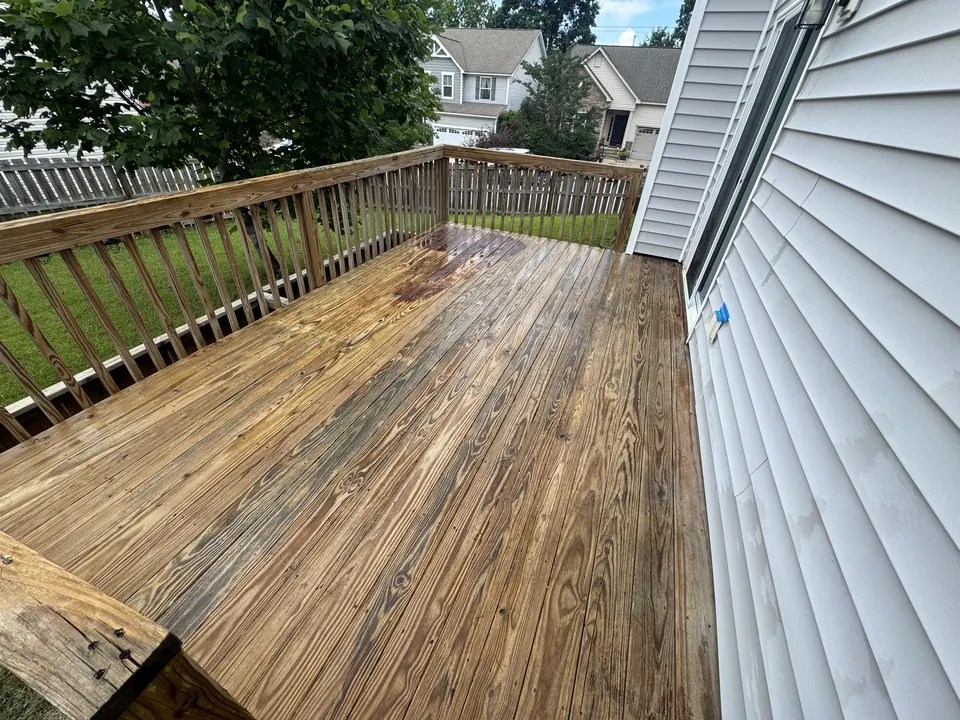
- Clean the driveway, walkways and decks. Pollen mixed with rain makes concrete and wood slippery. See driveway and concrete cleaning and deck cleaning.
- Wash windows and screens.
- Clear the gutters again. Pollen and spring debris often fill them.
This one-two approach, before and after, also helps you decide how often to wash your house in SC.
What about allergies?
If you or your family have seasonal allergies, a cleaner exterior and clear gutters will not cure them, but removing built-up pollen from porches, doors and walkways can cut down on how much gets tracked inside. For medical advice, talk to your doctor.
Why pollen and algae go together
Pollen is organic material. When it sits on damp siding or a shaded roof, it adds food for the algae and mildew already waiting there. In humid areas like the Lake Murray region, that means stains can show up soon after pollen season. Cleaning off the pollen and early growth keeps small problems small. For more on the lake side of this, see algae and mildew on Lake Murray homes.
Common questions
Should I wash my car and house in the middle of pollen season? You can, but expect the yellow film to return quickly. Many people wait until the heaviest weeks pass.
Does rain wash the pollen away? Rain clears some, but it can also turn pollen into a sticky film and carry it into gutters and onto decks and walkways, where it can leave a slick surface.
What about pollen on window screens? Screens catch a lot. Rinse them gently, and avoid high pressure that could bend or tear the mesh.
Is a pressure washer a good way to remove pollen? For siding, no. A gentle rinse or soft wash does the job without the risk of forcing water behind panels. See soft washing versus pressure washing.
A simple spring plan
- February to March: clear gutters, check the roof from the ground and schedule your wash.
- Peak pollen: rinse gently, keep things covered and be patient.
- Late spring: clean siding, concrete, decks and windows for the summer.
Let us handle it
We clean homes and businesses all around Lake Murray, and we know how fast spring changes things. Request a free quote or call (803) 528-1996. We serve Lexington, Irmo, Chapin, Red Bank, Ballentine, Gilbert and Columbia, and we respond within 24 hours.